
Lyft Medical Rides
When Public Healthcare Dollars Meet the Gig Economy’s Black Box
A Lyft driver in Los Angeles recently shared a screenshot from the driver app showing a striking discrepancy: a non-emergency medical transportation (NEMT) ride billed at $72, while the driver completing the trip was paid $16.
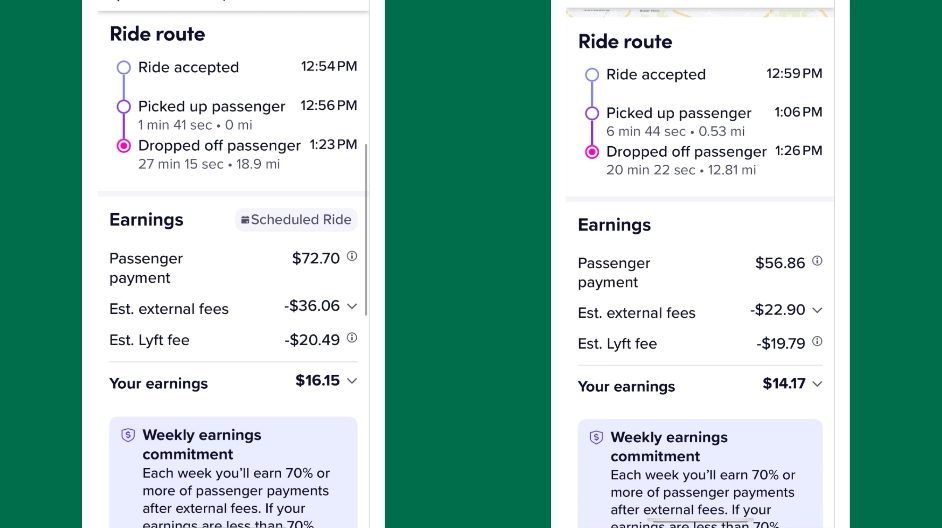
The image, clearly displays both the amount charged and the driver’s payout. Lyft does not publicly disclose how medical transportation prices are calculated, nor how much of the charge is allocated to drivers versus administrative or third-party fees.
The screenshot does not, on its own, prove fraud or illegal overbilling. But it raises a larger question that drivers, labor advocates, and healthcare watchdogs are increasingly asking: how transparent should pricing be when gig-economy platforms handle rides funded by public healthcare programs?
Medical rides and public money
Non-emergency medical transportation is often funded through Medicare Advantage plans or Medicaid managed-care organizations, which contract with private companies to ensure patients can reach medical appointments. In recent years, ride-hailing platforms like Lyft and Uber have become deeply integrated into this system, offering on-demand transportation at scale.
That integration has been widely praised for improving access to care. But it has also introduced Silicon Valley pricing models into a space traditionally governed by strict public oversight.
Unlike traditional medical transport providers, ride-share drivers say they receive little to no explanation of how healthcare fares are set, even when the app displays what the payer was charged.
We see the total — but not the logic
Lyft has stated publicly that drivers are independent contractors who are free to accept or decline trips, and that pricing reflects a range of factors, including operational costs and market conditions.
A flashpoint amid organizing efforts in Los Angeles
The timing of these concerns is notable. In Los Angeles, ride-share drivers have been increasingly engaged in organizing efforts and labor-style advocacy, pushing for minimum pay standards, greater transparency, and a stronger collective voice.
While drivers are not formally unionized, advocacy groups and informal collectives have gained momentum, arguing that algorithmic pay systems leave workers with little leverage — especially when platforms expand into regulated sectors like healthcare.
Medical rides, drivers say, have become a flashpoint.
“When the company starts handling healthcare trips, the stakes go up,” said a driver involved in local organizing discussions. “This isn’t just about flexibility anymore. This is about accountability.”

Not an accusation — but a spotlight
There is currently no public finding by regulators that Lyft or Uber have systematically overcharged Medicare or Medicaid. Past enforcement actions in the NEMT space have typically focused on third-party transportation providers or brokers, not ride-hail platforms themselves.
“Are public funds being used efficiently?”
An unanswered question
As ride-hailing platforms move deeper into healthcare logistics, they are no longer just consumer apps — they are becoming part of the infrastructure that public systems rely on.
The $72-to-$16 screenshot does not deliver a verdict. But it does expose a black box at the intersection of gig work, public healthcare funding, and algorithmic decision-making.
For drivers in Los Angeles who are beginning to organize, that lack of visibility is no longer something they’re willing to accept quietly.
And for taxpayers, patients, and regulators, the question lingers:
when public money flows through private platforms, who is responsible for explaining where it goes?
David Frein
Abet News | February 5, 2026
Related Posts








One comment on Lyft Medical Rides
I’ve been driving Uber and Lyft as a side hustle for a few years. I’m not just a driver; I’m also a stockholder. Every year it’s been getting worse. Most trips are not worth it for drivers to accept. The new algorithm has made it nonprofitable for drivers, and the stocks are not doing well. Overall, it’s not a good experience.