
Every Destination Has A Story. Sometimes That Story Becomes Music.
Artists often speak about inspiration as if it arrives like a lightning strike — sudden, sourceless, inexplicable.
ABET NEWS · MUSIC · JUNE 29, 2026
The truth is usually quieter than that.
Inspiration finds its way in during a conversation, while watching a sunset, or walking through a city that leaves something behind in you. Sometimes a single view becomes a melody. A memory becomes a song.
That is what happened with GoAvo’s instrumental composition, Golden Link, De La Mer.
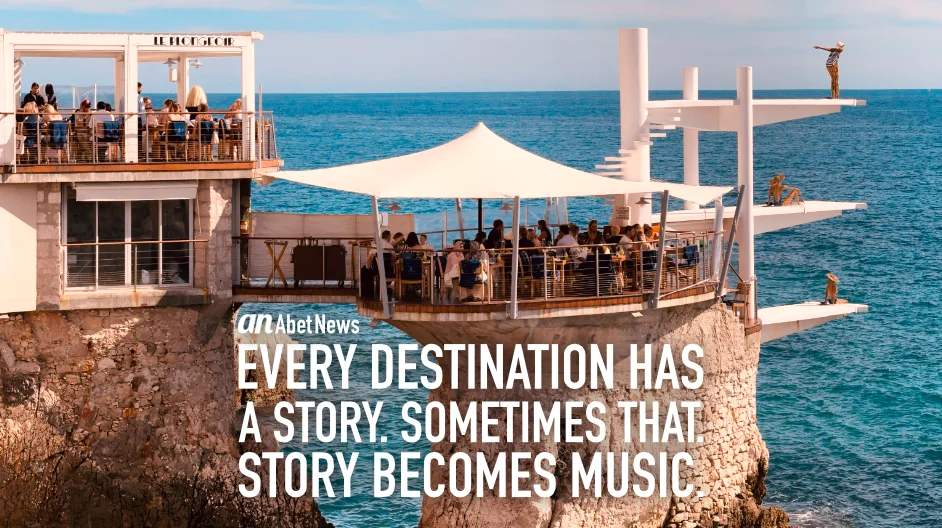
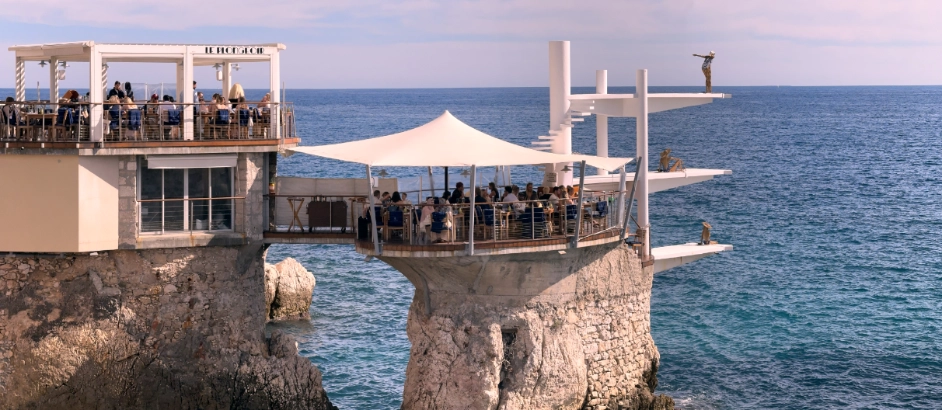
The piece was inspired by Le Plongeoir — the iconic Mediterranean restaurant in Nice, France. Suspended above the sea on a rocky outcrop and connected to the shoreline by a narrow walkway, Le Plongeoir occupies a space that feels less like a dining destination and more like a place that shouldn’t exist at all. The deep blue of the Mediterranean presses in on all sides. The horizon stretches without boundary. Standing there, solid ground feels like an idea rather than a fact.
The location has drawn visitors for generations. Long before the modern restaurant took shape, the site was already gathering people during the Belle Époque, when a fishing-boat-inspired structure perched above the waves became a celebrated meeting point on the French Riviera.
For GoAvo, the inspiration was the atmosphere itself.
The sound of the sea below. The Mediterranean light fracturing off the water. The contrast between immovable rock and infinite horizon. The strange, suspended feeling of standing somewhere that seems to exist outside ordinary geography.
Those experiences became Golden Link, De La Mer.
The title does what it promises — suggests a connection, a golden link, between memory and music, between a place lived in and a place reconstructed through sound. Between a moment that belongs to one person and something that can be shared by thousands.
What makes the story worth telling is how the artist chose to document and transform it.
The promotional video was shot directly by GoAvo using an iPhone during the visit — no stock footage, no staged production. The visuals are the real environment that sparked the composition: the waves, the coastline, the distinctive silhouette of Le Plongeoir, the wide sweep of the Riviera. Viewers don’t see an interpretation of the inspiration. They see the inspiration itself.
But the video doesn’t stop at documentation.
Along the right side of Le Plongeoir’s architecture, three ledges rise above the water. On each one stands the statue of a woman — stone figures that have watched the Mediterranean from that height for years. The highest of the three stands at the edge, poised above the sea as if frozen mid-thought, caught in the moment just before a decision is made.
In the video, she doesn’t stay frozen.
Through AI animation, the statue comes alive. She steps to the edge, and dives — plunging into the ocean below in a sequence that feels both inevitable and startling. It is the video’s defining moment: stone becoming motion, stillness becoming release.
It also captures something true about the song itself. Golden Link, De La Mer is built from exactly that tension — the suspended moment between experience and expression, between standing somewhere extraordinary and finding a way to carry it forward. The diving statue makes that tension visible.
The result is a video that moves between two modes of truth. iPhone footage that preserves the real place as it actually was. AI animation that takes one element of that place and asks what it might do if it could. Together, they don’t contradict each other — they deepen the same idea.
That matters now more than it might seem. In an era saturated with algorithmic content and artificially generated imagery, there is something worth noting about art that begins with a person standing somewhere, paying attention — and then finding creative ways to honor what they found there.
Artists have always worked this way. Monet chased the light across the same landscapes, season after season, painting not the object but the quality of attention. Writers have long turned cities into characters. Musicians have translated environment into mood, atmosphere into melody.
Golden Link, De La Mer sits in that tradition — and extends it.
It functions as a musical postcard, specific in its origin and universal in what it reaches for. Listeners who have never been to Nice, who have never crossed the narrow bridge to Le Plongeoir, can still find their way to something of what inspired it. And viewers who have never seen a stone figure perched above the Mediterranean can watch her, for a moment, become something more than stone.
That may be the most enduring quality of artistic inspiration.
A moment that belongs to one person can become an experience shared by thousands.
The next great song might not begin with a guitar, or a piano, or a recording session.
It might begin with a view from somewhere unlikely.
It might begin with the feeling of standing above the sea — watching a statue that looks like it’s about to jump.
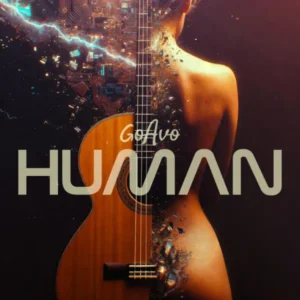
Available on all major streaming platforms. Streaming links at GoAvo.com.
Amy H.
© 2026 Abet News. All rights reserved.
Related Posts



8 comments on Every Destination Has A Story. Sometimes That Story Becomes Music.
I’ve been there. The food is great, and the vibe is fantastic. I’m also loving the Human album.
Great music! Le Plongeoir is on my bucket lists.
Very cool album 👌✌️
My dream is to retire on the French Riviera 😀 Human is 🔥
Moonlight rising is very sexy 🔥
You did it again. Loving the album.
Great album, you have good taste. I’ve been to Le Plongeoir few times, good food and atmosphere.
I’m loving the album, your music is very soulful. The grooves, the vibe, and the tone of the guitar is very sweet, what gear did you use? If you do a tour, we love music like this in Turkiye.
Search: Post title, topic
Apple TV+
JMI Construction
© Abet News
Posts
About
Contact
Login
Privacy Policy