Europe Just Became a Banker to the AI Future
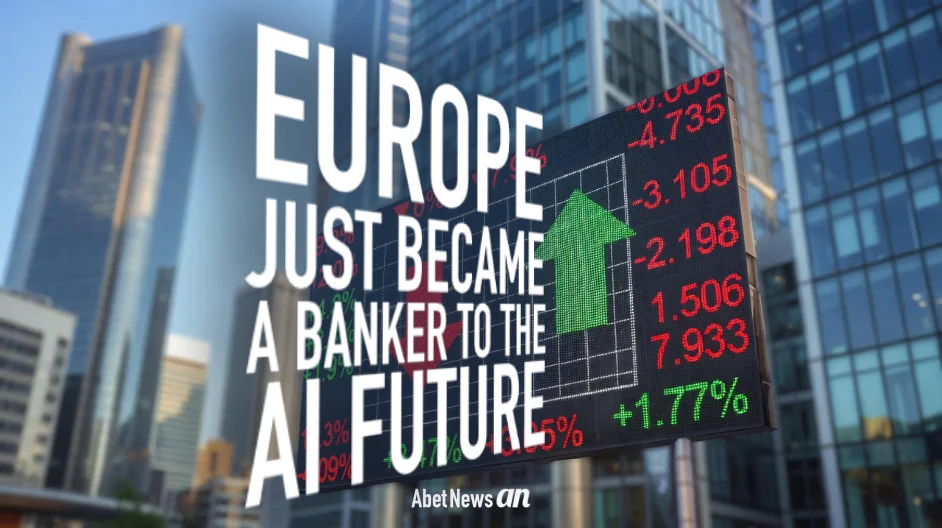
Alphabet’s Sterling Bond Deal Signals a New Era in Global Credit Markets
Alphabet’s debut in the sterling bond market was more than a successful fundraising exercise. It was a stress test of Europe’s capacity — and willingness — to finance the next decade of AI‑driven infrastructure. The results were emphatic. With roughly £30 billion in demand and a 100‑year tranche that sold out with ease, the deal has quickly become a reference point for how global capital markets are reorganizing around the needs of hyperscale technology companies.
A Market Once in Question, Now a Magnet for Megacaps
The sterling market’s resurgence is striking. Less than a year ago, investors openly questioned its relevance as issuance slowed and liquidity thinned. Alphabet’s arrival reversed that narrative in a single day. The order book was not just large; it was unprecedented for a first‑time issuer in sterling.
The reason is structural. UK pension funds and insurers carry liabilities that stretch decades into the future. They need long‑duration assets — often 30, 50, or even 100 years — to match those obligations. Domestic UK corporates rarely issue at those maturities. Alphabet filled a void, and the market responded with overwhelming demand.
Europe’s Capital Is Outgrowing Its Issuers
The enthusiasm for Alphabet’s bonds reflects a broader imbalance. European investment‑grade funds have experienced 32 consecutive weeks of inflows, leaving them flush with cash. Yet domestic supply has not kept pace. Investors are increasingly forced to look beyond Europe’s borders for high‑quality, long‑dated credit.
US megacaps, with their pristine balance sheets and global revenue bases, are natural beneficiaries. Alphabet’s deal demonstrates that Europe is not only open to financing these companies — it is hungry for the opportunity.
The Dissolving Boundary Between US and European Credit
For decades, US and European credit markets operated in parallel. Issuers tended to stay within their home markets, and investors could manage risk by focusing on local economic cycles. That separation is now eroding.
Hyperscalers are global entities with global capital needs. Their entry into European markets forces credit managers to integrate US tech fundamentals into portfolios that were once insulated from American macro dynamics. Exposure to Alphabet, Microsoft, Amazon, or Meta is exposure to the US regulatory environment, the US consumer, and the US economic cycle.
The result is a quiet but consequential shift: European credit markets are becoming structurally tied to the performance of US technology.
Corporate Credit as a Substitute for Sovereign Debt
Perhaps the most significant development is the emerging role of US tech debt as an alternative to European government bonds. For institutions seeking duration and safety, the comparison is increasingly compelling. Many megacaps carry credit ratings on par with — or higher than — several European sovereigns. Their bonds offer longer maturities, better liquidity, and yields that are often more attractive than gilts or bunds.
The 100‑year Alphabet bond is emblematic of this shift. What once would have been viewed as an exotic instrument is now a practical solution for long‑horizon investors.
Financing the AI Infrastructure Boom
Behind the market dynamics lies a deeper story: the capital intensity of the AI era. Hyperscalers are entering a period of extraordinary investment in data centers, compute capacity, energy infrastructure, and global connectivity. The scale of these expenditures will dwarf traditional corporate CapEx cycles.
The US credit market alone cannot absorb the coming wave. Europe, with its deep pools of long‑duration capital, is emerging as a critical financing partner. Alphabet’s sterling deal is likely the first of many. Market participants are already speculating about which hyperscaler will follow — and how soon.

A Template for the Future
Alphabet’s issuance is more than a milestone. It is a template for how global capital will flow in the decade ahead. The deal signals that European markets are poised to become a major funding source for US technology companies, particularly those building the infrastructure that will define the next generation of computing.
If the sterling market was once in doubt, it is now clear: Europe is ready to bankroll the AI future.
Aeron Nersoya
Abet News | February 10, 2026
Related Posts



#AbetNews, #AeronNersoya, #AI, #AIEcosystem, #AIFinancing, #AIFuture, #AIInfrastructureFinancing, #AIInvestment, #AIMegacycleCapital, #AITechnology, #Alphabet, #AlphabetAI, #Article, #ArtificialIntelligence, #EU, #EuropeanCreditMarkets, #EuropeBanker, #Gemini, #Google, #Industry, #IndustryImpact, #SterlingBond, #Tech, #TechIndustry, #TechMegacapDebt, #TechNews, #Technology
Apple TV+

JMI Construction