iOS 27.2.1: The iPhone Speaker Volume Bug That Apple Still Needs to Fix
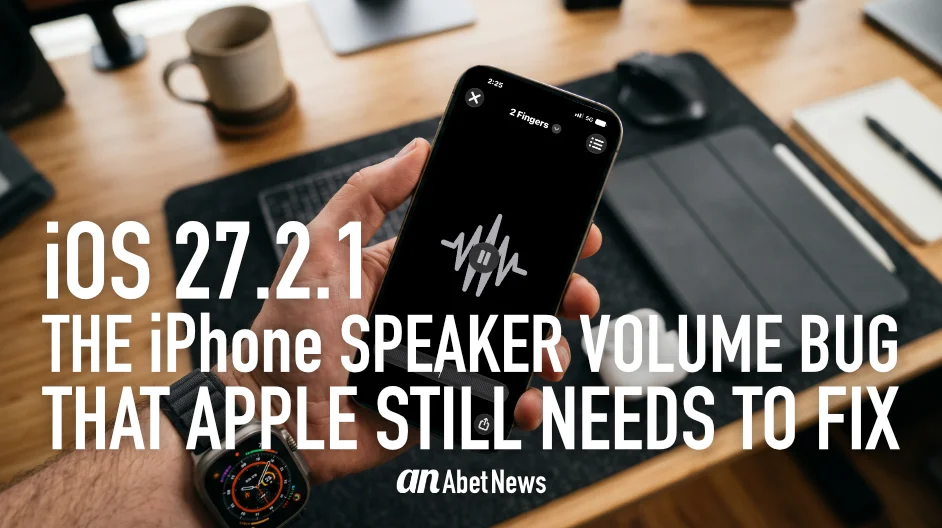
ABET NEWS | APPLE / IOS / TECHNOLOGY | NOVEMBER 15, 2026
Apple’s latest iOS updates are supposed to make the iPhone better, more reliable, and more secure. But for some users, the experience has been quite different. Reports of fluctuating audio levels, speaker distortion, crackling, and unexpected volume changes continue to surface across Apple’s iPhone lineup.
And despite several updates since the introduction of iOS 27, users are still looking for answers.
When the volume starts behaving like a faulty compressor
Among the complaints are reports of audio that suddenly becomes quieter, fluctuates during playback, or produces crackling and popping sounds.
Some users describe the volume dropping unexpectedly while watching videos or listening to music. Others report distortion through the built-in speakers, sometimes across multiple applications.
A November 9 discussion on Reddit included an iPhone 17 Pro owner describing audio volume that repeatedly jumped up and down following an iOS 27.2 update.
Earlier reports have also described speaker distortion following iOS 27 updates, including complaints involving the iPhone 16 and newer iPhone 18 Pro models.
These reports do not establish that every device is affected by the same defect, but they raise a reasonable question: Is Apple dealing with a broader audio-software reliability problem?
iOS 27.2.1 arrived, but where is the audio fix?
Released on November 9, iOS 27.2.1 was a relatively minor update focused primarily on security vulnerabilities.
Apple’s published security documentation identifies fixes involving Bluetooth, AirPlay, Messages, App Intents, and other system components. However, it does not identify a specific correction for the reported speaker-volume fluctuations or audio distortion.
That leaves users with an uncomfortable situation: multiple reports, several software releases, and no clearly documented resolution for the audio symptoms being discussed.
The absence of a documented fix doesn’t necessarily mean Apple hasn’t investigated the problem. But users deserve more transparency when an issue continues across software releases.
Is the problem related to Apple’s audio processing?
The technical possibilities deserve closer examination.
Modern iPhones use sophisticated audio processing to manage speaker output, dynamic range, amplification, and protection against excessive distortion.
Dynamic limiting, for example, can reduce audio peaks to protect small speakers from excessive excursion. This is normal behavior, particularly when reproducing bass-heavy music at higher volumes.
However, when playback begins to sound as though an aggressive compressor is continuously adjusting its gain, it raises questions about whether the audio-processing system is behaving as intended.
Other possible explanations include audio-session management, gain-control behavior, software regressions, or speaker-specific amplification issues.
At this point, none of these explanations has been confirmed as the underlying cause.
The distinction matters. A hardware speaker failure, an audio-processing defect, and an operating-system regression require very different solutions.
Apple has the engineering resources to investigate
Apple isn’t new to professional audio.
The company develops Logic Pro, Core Audio, sophisticated computational audio technologies, and the hardware and software systems responsible for reproducing sound across its devices.
Apple employs engineers with extensive experience in digital signal processing, dynamic range management, audio routing, and speaker engineering.
It should have the tools and expertise to investigate whether a software change has affected audio reproduction across particular iPhone models.
Reproducing a reported problem under controlled conditions, comparing audio behavior across iOS versions, and examining changes to the audio pipeline are all reasonable engineering steps.
The challenge is not necessarily a lack of technical expertise. It may be identifying the exact combination of software, hardware, applications, and playback conditions responsible for the symptoms.
Nevertheless, customers shouldn’t have to repeatedly reset their devices or experiment with settings in the hope of restoring normal audio.
A reset is not a permanent solution
One particularly frustrating aspect of these reports is the experience of users who have attempted extensive troubleshooting.
A Reset All Settings can sometimes temporarily improve software-related problems. But when the same behavior returns shortly afterward, it raises questions about whether the underlying issue has actually been resolved.
In one reported iPhone 15 Pro Max case, a reset all settings temporarily restored normal audio, only for the unusual volume behavior to return the following day.
The user described the sound as resembling aggressive compression, with the effect becoming particularly noticeable during louder musical passages volume set around 75%.
This is a useful observation because it points toward a specific audible behavior rather than a general complaint about poor sound quality. It does not, however, establish whether the cause is software or hardware.
Apple’s reputation depends on more than new features
Apple frequently emphasizes the advantages of designing its hardware and software together. That integration is one of the company’s biggest selling points.
But integration also brings responsibility.
When an operating system update affects something as fundamental as audio reproduction, users reasonably expect Apple to identify the problem, communicate its findings, and deliver a correction.
Security updates are important, new features are welcome, and technological progress is inevitable. But none of those things should come at the expense of basic reliability.
The iPhone is a communication and entertainment device used daily for music, video, calls, and countless other activities. Consistent audio reproduction should not be considered an optional luxury.
Apple needs to investigate these reports, establish whether they share a common cause, and provide users with a meaningful explanation.
Because when an iPhone starts behaving like a poorly calibrated audio processor, the problem isn’t simply an inconvenience. It’s a question of software quality and the reliability customers expect from a premium device.
Abet News will continue following reports of iOS audio problems and Apple’s response.
Have you experienced unusual volume fluctuations, audio pumping, crackling, or speaker distortion on your iPhone after updating to iOS 27?
Which iPhone model are you using, and which iOS version?
We’d like to hear about your experience.
Andy Young
© 2026 Abet News. All rights reserved.
Related Posts




Apple TV+
JMI Construction