
Is the U.S. vs Iran Tension a Front in the War on BRICS’ De-Dollarization?
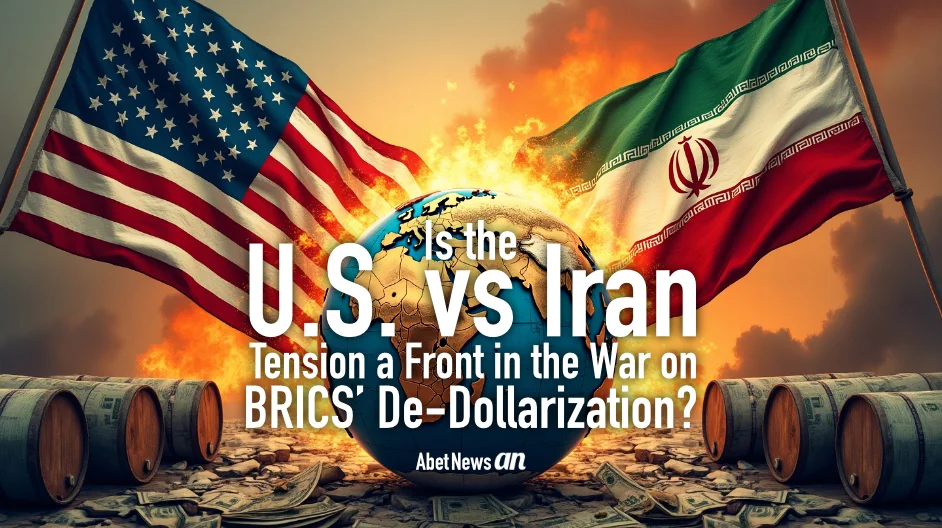
As global power shifts from West to East, a new kind of war may be unfolding—not over territory, but over energy, currency, and control of the world’s financial future.
A Proxy War in Plain Sight?
While headlines often frame U.S.-Iran tensions as religious, ideological, or nuclear, a deeper economic struggle may be at play. With Iran now a key member of BRICS—an increasingly assertive economic alliance—some are asking: Is the U.S. trying to weaken BRICS by isolating its energy crown jewel?
What Is BRICS and Why Is It Expanding?
BRICS, originally comprising Brazil, Russia, India, China, and South Africa, has grown into a formidable intergovernmental organization. In 2024, it expanded to include Egypt, Ethiopia, Iran, Indonesia, and the United Arab Emirates—nations rich in resources and ambition.
This bloc represents over 40% of the global population and an increasing share of global GDP. But more importantly, BRICS is united by a common goal: breaking free from the U.S. dollar’s dominance.
The BRICS De-Dollarization Drive
For decades, the U.S. dollar has been the default currency for international trade, giving Washington significant leverage over the global economy. Sanctions, trade controls, and financial pressure have all relied on this dominance.
But BRICS is pushing back
From trading in local currencies to developing alternative financial systems, member states are creating frameworks to reduce reliance on the dollar. There’s even talk of a BRICS reserve currency, potentially backed by a basket of commodities like gold and oil.
Iran: BRICS’ Energy Crown Jewel
Iran holds the second-largest natural gas reserves in the world and boasts 163 billion barrels of proven oil reserves. As Western powers retreat, BRICS has welcomed Iran with open arms—not just as a political ally, but as an energy superpower central to the bloc’s economic strategy.
Iran’s oil and gas could fuel BRICS growth while providing the physical backing for any future alternative to the U.S. dollar. That makes Iran a strategic asset—and a potential target.
U.S. Foreign Policy: Defense or Disruption?
The U.S. has long used economic sanctions to isolate Iran. But with Tehran’s pivot eastward, those sanctions are less effective. China is buying Iranian oil. Russia is increasing cooperation. India and Brazil are exploring new trade terms.
This raises an uncomfortable question: Could rising tensions with Iran be part of a broader effort to disrupt BRICS’ momentum? After all, undermining Iran’s role in the bloc could blunt BRICS’ energy edge—and stall de-dollarization in its tracks.
Some analysts are even calling this a financial Cold War, where battles are fought through sanctions, trade alliances, and economic pressure—not bombs.
Multipolar Futures and Dangerous Intersections
What happens if Iran becomes not just BRICS’ energy heart—but the test case for whether BRICS can withstand U.S. pressure?
Will the world accept a multipolar financial order, or will old empires strike back?
If Iran is the litmus test, then the stakes are far higher than any headline suggests. This is not just about pipelines and politics—it’s about who gets to define the future of global finance.
Iran’s growing role in BRICS—and BRICS’ push to end dollar dominance—could reshape the geopolitical map. Whether we’re witnessing another chapter in Middle East conflict or the early stages of a global financial revolution, one thing is certain:
The front lines of this battle may no longer be drawn in the sand, but in the vaults of central banks—and the energy corridors of a new world order.
🧠 What do you think?
Is the U.S. fighting to protect freedom—or financial supremacy?
Is BRICS a challenge to Western hegemony or a necessary shift toward global balance?
Join the conversation. Share your thoughts below or on social media.
David Frein
Abet News | Jun 22, 2025 – Jun 25, 2025
Related Posts










One comment on Is the U.S. vs Iran Tension a Front in the War on BRICS’ De-Dollarization?
It’s more like NATO vs Brics, and if Iran is a jewel, then it just got its jewel kicked. NATO-1 Brics-0.