Is MacBook Neo a True Return to Steve Jobs’ Spirit — or Strategic Nostalgia?
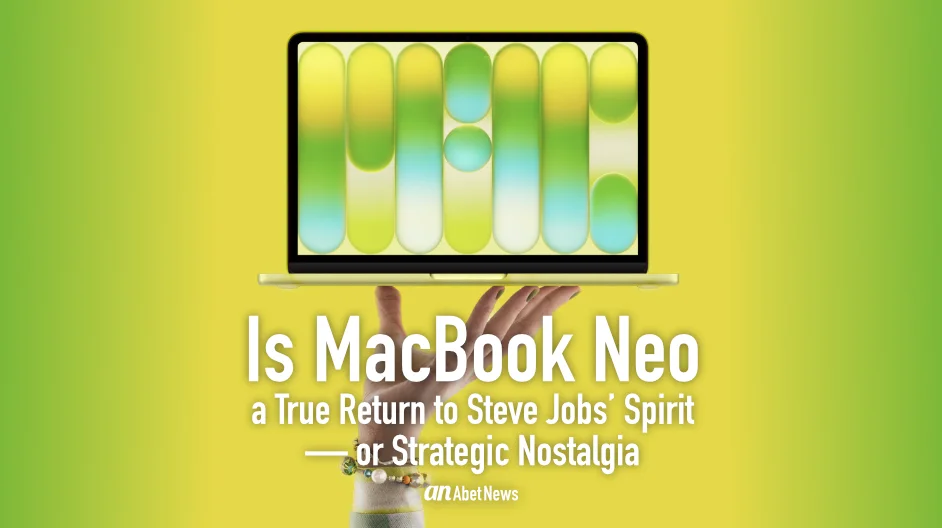
For over a decade, one question has quietly followed every major Apple launch:
Has Apple lost its edge?
With the release of MacBook Neo, that question is resurfacing — but this time with a twist. Some are suggesting that the spirit of Steve Jobs is visible again inside Apple Inc..
The design feels focused. The messaging feels restrained. The product positioning feels confident rather than defensive.
But is this philosophical revival — or highly intelligent brand calibration?
What Made Steve Jobs’ Apple Different?
To understand the Neo narrative, we have to revisit what made Jobs-era Apple culturally dominant.
It wasn’t just minimalism. It was conviction.
Jobs eliminated products ruthlessly. He simplified categories. He rejected market research when it conflicted with vision. The company felt founder-led in a way that bordered on artistic dictatorship.
Modern Apple is different by necessity. It is a global ecosystem with services revenue, regulatory battles, supply chain diplomacy, and investor expectations that dwarf the early 2000s.
Which raises the central question:
Can a corporation of this scale truly operate with founder-like boldness — or can it only simulate it?
Hello, MacBook Neo
The Psychology of Nostalgia
MacBook Neo lands in a moment where many consumers feel fatigue from incremental updates across the tech industry. Innovation has become evolutionary rather than revolutionary.
In that environment, a product that feels “clear” can trigger emotional recognition. It reminds people of when Apple felt disruptive rather than dominant.
But perception is powerful — and companies understand that.
Is Neo a manifestation of internal creative reawakening?
Or is it a precisely engineered response to cultural longing?
Those two possibilities are not mutually exclusive. But they are not identical either.
Strategic Simplicity vs. Philosophical Simplicity
There is a difference between simplifying because you believe in restraint — and simplifying because the market responds well to restraint.
If Apple is strategically echoing Jobs’ ethos, that is smart branding.
If Apple is structurally reorganizing around fewer compromises and stronger product conviction, that is cultural transformation.
The real signal will not be MacBook Neo itself.
It will be what follows.

The Long-Term Test
One product can spark conversation.
A sustained shift can redefine identity.
If future product lines continue this focused, emotionally resonant direction, then we may genuinely be witnessing a subtle but meaningful shift inside Apple.
If not, MacBook Neo may stand as something else entirely:
A masterclass in how to reawaken legacy without altering infrastructure.
Analytical lens reminds us:
Spirit is not a feature.
It is a pattern over time.
And that pattern is still unfolding.
“MacBook Neo has Steve Jobs spirit.
Cheers!! Apple”
Aeron Nersoya
Abet News | March 4, 2026
Related Posts




#AbetNews, #AeronNersoya, #Apple, #AppleInnovations, #AppleProducts2026, #AppleProductStrategy, #AppleUpdate, #AppleUsers, #Article, #Industry, #IndustryImpact, #Introducing, #MacBookNeo, #SteveJobs, #SteveJobsLegacy, #SteveJobsSpirit, #Tech, #TechIndustry, #TechIndustryNostalgia, #TechNews, #Technology
Apple TV+

JMI Construction