The Great AI Fragmentation
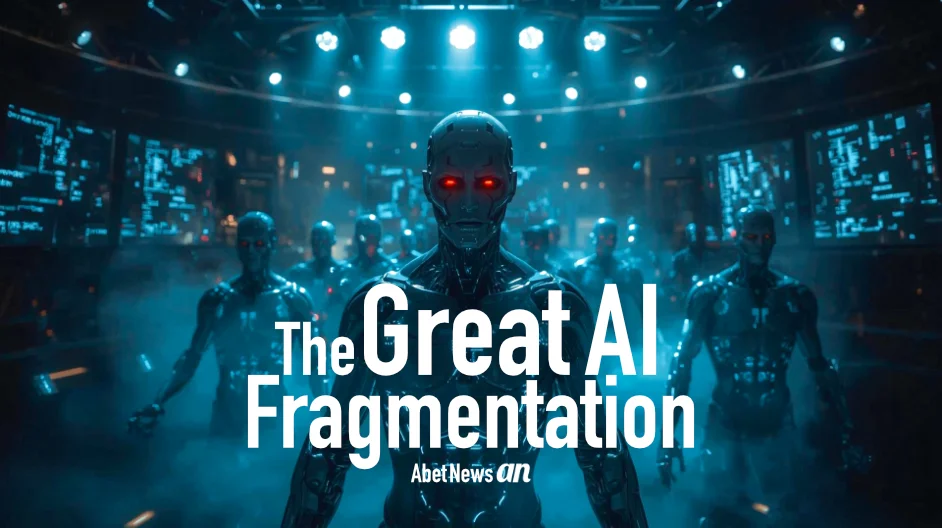
Is the Future of Artificial Intelligence Going Local?
In the global race to develop artificial intelligence, a new chapter is unfolding. While American giants like OpenAI and Google dominate headlines, a quiet but powerful shift is happening: AI is going local. From Tokyo to Paris to Abu Dhabi, regional AI powerhouses are emerging with bold ambitions—not just to compete, but to define their own futures.
This mirrors what we’ve seen before in the digital world—when search, maps, and social media fractured into regional ecosystems. Baidu for China. Yandex for Russia. LINE for Japan. Now, it’s AI’s turn.
Japan’s Sakana.ai: Innovation by Nature
Founded by ex-Google Brain researchers, Tokyo-based Sakana.ai is challenging the status quo with a radically different philosophy: lean, nature-inspired models. Rather than pouring billions into ever-larger language models, Sakana is betting on swarm intelligence and evolutionary techniques—systems that grow by learning from each other, like fish in a school.
They represent more than just technical creativity. Sakana symbolizes a new wave of regional identity in AI—rooted in local innovation, cultural context, and independence from Silicon Valley.
China’s DeepSeek and the Walled-Off Superpower
Founded by ex-Google Brain researchers, Tokyo-based Sakana.ai is challenging the status quo with a radically different philosophy: lean, nature-inspired models. Rather than pouring billions into ever-larger language models, Sakana is betting on swarm intelligence and evolutionary techniques—systems that grow by learning from each other, like fish in a school.
They represent more than just technical creativity. Sakana symbolizes a new wave of regional identity in AI—rooted in local innovation, cultural context, and independence from Silicon Valley.
Europe’s Rise: Mistral and Aleph Alpha
Europe, long considered behind in the AI race, is now finding its own voice—and funding it too.
Mistral (France)
Fresh off a major funding round and the release of Magistral, Europe’s first AI reasoning model, Mistral is going all-in on AI sovereignty. The company is building a massive 40-megawatt data center near Paris in partnership with Nvidia, with the goal of keeping compute and data within EU borders.
“We want Europe to have its own infrastructure, its own values, and its own voice in the AI age,” said Mistral CEO Arthur Mensch.
Aleph Alpha (Germany)
While not as flashy as Mistral, Aleph Alpha is carving out its niche in interpretable, enterprise-grade AI for regulated industries. Its PhariaAI platform emphasizes explainability and compliance—essential in a region governed by the EU’s sweeping AI Act.
Europe’s model isn’t about scale. It’s about trust, transparency, and independence.

Is the U.S. Overcrowded?
Just like the internet fractured along borders and cultural lines, AI is now doing the same. The reasons are clear:
• Data sovereignty laws (GDPR in the EU, China’s data firewall)
• Geopolitical concerns (national security, economic control)
• Cultural alignment (language nuance, ethical norms)
• Compute infrastructure (who owns the GPUs, and where?)
“AI is no longer just a technical race. It’s a contest of values, governance, and global alignment,” says AI policy researcher Dr. Elodie Brunet.
What Happens Next?
This fragmentation raises important questions:
• Will AI become a balkanized technology, shaped by politics as much as performance?
• Can smaller nations build sovereign AI systems, or will they rely on alliances?
• Will OpenAI’s global dominance hold, or is a multipolar AI world inevitable?
What’s clear is this: The era of global, monolithic AI is ending. In its place, we’re entering an age of regional intelligence ecosystems—each shaped by local data, laws, and ambitions.
As with search engines, messaging apps, and cloud providers before it, AI is now fragmenting into regional spheres of influence. And while OpenAI may still lead the pack, the future of artificial intelligence looks increasingly decentralized, diverse, and defined by borders.
Just like everything else online.
Petra Lugar
Abet News | June 11, 2025
Related Posts




Apple TV+

JMI Construction