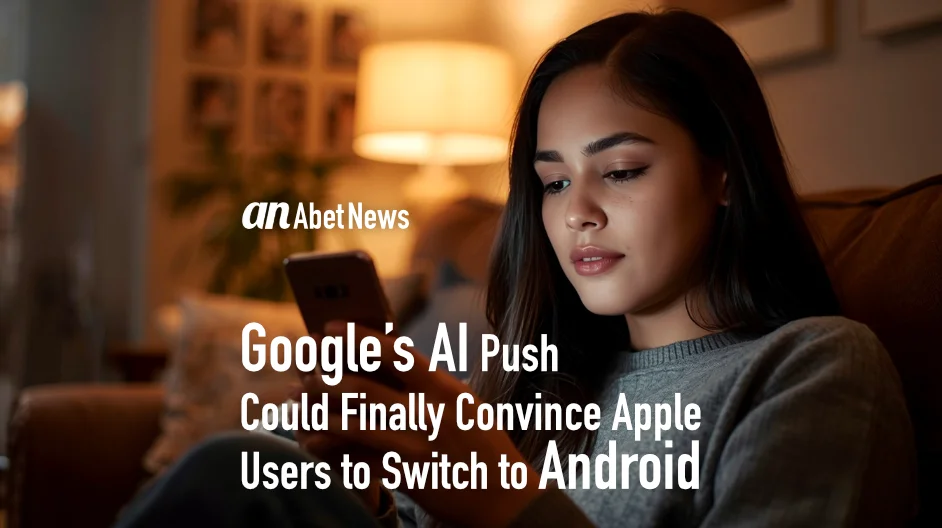
Google’s AI Push Could Finally Convince Apple Users to Switch to Android
ABET NEWS · AI TECH · MAY 27, 2026
For years, Android phones have competed against the iPhone with better specs, larger batteries, higher refresh-rate displays, and more customization. Yet despite impressive hardware innovations, many Apple users stayed loyal to the iPhone ecosystem.
Artificial intelligence may finally change that.
As Google rapidly integrates Gemini AI across Android — especially into Pixel phones and tablets — the company may have discovered its strongest opportunity in years to challenge Apple’s dominance in the premium smartphone market.
This time, the battle is not about megapixels or screen sizes.
It is about which operating system feels smarter.
AI Is Becoming the New Operating System Layer
The smartphone industry appears to be entering a new phase where AI is no longer just an app or chatbot, but a deeply integrated system layer capable of understanding context, automating tasks, organizing information, and assisting users throughout the day.
Google’s vision increasingly positions Android as an AI-first operating system.
Features such as:
• AI-assisted search
• contextual voice interactions
• real-time summaries
• intelligent photo editing
• live translation
• proactive recommendations
• task automation
…are transforming the smartphone from a passive device into an active digital assistant.
If Google keeps many of these advanced experiences exclusive to Pixel devices, the company could create a compelling reason for iPhone users to reconsider Android for the first time in years.
Apple’s Biggest Threat May Be Perception
Apple still dominates in ecosystem consistency, premium branding, privacy, and user loyalty. However, the company’s AI rollout has been perceived by some consumers as cautious and slower compared to Google’s aggressive AI expansion.
For years, users criticized Siri for lagging behind competitors in intelligence and usefulness. While Apple Intelligence represents an important step forward, Google’s Gemini integration currently feels more ambitious and more deeply connected to everyday workflows.
That perception matters.
Technology shifts are often driven less by raw capability and more by consumer emotion:
• Which device feels futuristic?
• Which assistant feels useful?
• Which ecosystem appears to lead innovation?
If consumers begin viewing Pixel devices as the “smartest” smartphones available, Google could gain momentum in areas where Android previously struggled.
The Pixel Strategy Could Become Google’s iPhone Moment
Historically, Google developed Android while allowing manufacturers like Samsung to dominate the hardware spotlight.
AI changes that equation.
By tightly integrating Gemini with Pixel hardware and software, Google can control the entire AI experience in a way similar to Apple’s ecosystem strategy.
This creates the possibility of Pixel becoming:
• the showcase for Google AI
• the flagship AI-first smartphone
• the premium Android identity
In many ways, Google appears to be borrowing from Apple’s own playbook:
tight hardware-software integration.
The irony is significant.
The Risk for Apple
Apple’s privacy-first approach gives the company long-term trust advantages, but AI rewards speed, experimentation, and large-scale data integration — areas where Google traditionally excels.
Google owns:
Search
YouTube
Gmail
Maps
Workspace
Android
Gemini
Together, these services create one of the world’s most powerful AI ecosystems.
If Google successfully turns that ecosystem into a seamless consumer AI experience, Apple may face growing pressure from users expecting more intelligent and proactive devices.
The danger for Apple is not losing existing loyal customers overnight.
The danger is allowing a narrative to form that Android is becoming the future while iPhone becomes the safer but less innovative choice.

The Smartphone War Is Changing
For more than a decade, the mobile industry revolved around hardware design and app ecosystems.
The next decade may revolve around personal AI ecosystems.
The question may no longer be:
“iPhone or Android?”
Instead, consumers may ask:
“Which phone thinks smarter?”
And for the first time in years, Google may have an answer strong enough to reshape the conversation.
Petra Lugar
© 2026 Abet News. All rights reserved.
Related Posts


#AbetNews, #AI, #AIAssistants, #AIDevelopment, #AINews, #AITechnology, #Alphabet, #AlphabetAI, #AndroidAI, #Apple, #AppleAI, #AppleVsAndroid, #AppleVsGoogle, #Article, #ArtificialIntelligence, #Gemini, #GeminiAI, #Google, #GooglePixel, #Industry, #IndustryImpact, #PetraLugar, #PixelAI, #PixelvsiPhone, #Tech, #TechIndustry, #Technology
Apple TV+
JMI Construction