The Magnetic Frontier
Rare Earths, Power, and the Battle for Tomorrow
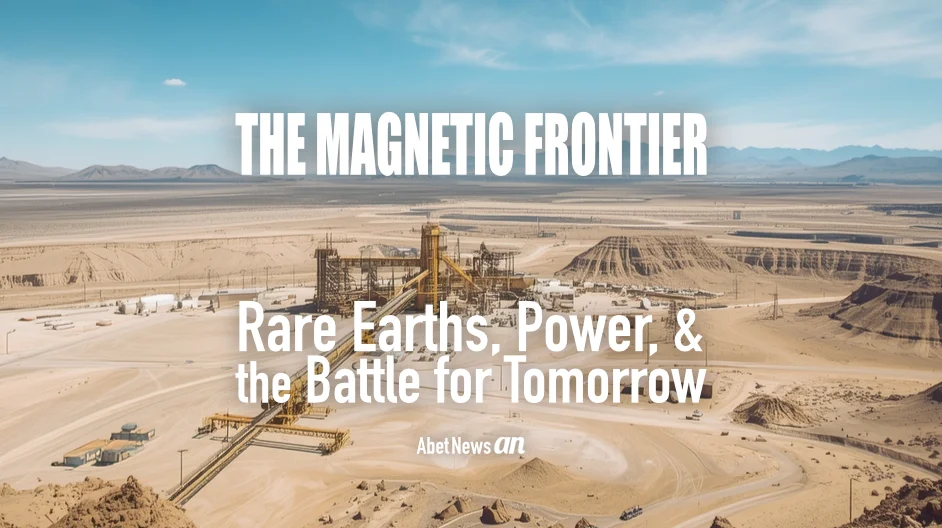
In the shadow of California’s Mojave Desert, the Mountain Pass mine hums with renewed urgency. Once a forgotten relic of Cold War ambition, it now stands at the heart of a global race for control over the metals that power modern life. Rare earth elements—those elusive, shimmering atoms tucked deep within the Earth—are the unsung heroes of our digital age. They whisper through every smartphone vibration, guide missiles with silent precision, and spin the turbines of a greener future.
But beneath their quiet utility lies a geopolitical drama decades in the making.
Mountain Pass: Where It All Began
Discovered in the 1940s and developed through the 1950s, Mountain Pass was the world’s leading source of rare earths for decades. Its ores held neodymium, praseodymium, and dysprosium—critical ingredients for permanent magnets and advanced electronics. Yet by the 1990s, environmental regulations and cheaper overseas production shuttered its dominance.
Then came a pivotal moment: in 1995, China acquired Magnequench, a U.S. company holding key patents for rare earth magnets. With it, China didn’t just buy intellectual property—it bought leverage. Over the next two decades, China built a vertically integrated empire of mining, refining, and manufacturing, controlling over 90% of the global rare earth supply chain.
China’s Magnetic Grip
In 2025, China’s dominance is no longer just economic—it’s strategic. Recent export controls on rare earth technologies have sent shockwaves through global markets. Companies now require special licenses to ship products containing even trace amounts of Chinese-sourced rare earths. The message is clear: control the magnets, control the machines.
From electric vehicles to hypersonic weapons, rare earths are the lifeblood of innovation and defense. And China’s grip on them is tightening.
Defense, Deterrence, and the New Arms Race
Rare earths are embedded in the soul of modern warfare:
• F-35 fighter jets rely on neodymium magnets for flight control systems.
• Missile guidance systems use samarium-cobalt alloys for precision.
• Stealth technologies depend on yttrium and terbium for radar absorption.
The Pentagon has labeled rare earths a national security priority. In response, the U.S. has invested in domestic refining, recycling, and alternative sourcing. Mountain Pass, now operated by MP Materials, is being revitalized with plans to build a full magnet supply chain on American soil.
The Global Reckoning
Other nations are joining the scramble:
• Australia and Canada are ramping up mining and processing.
• The EU is funding rare earth innovation and circular economy initiatives.
• Japan and South Korea are stockpiling and diversifying supply chains.
The race isn’t just about metals—it’s about autonomy, resilience, and the future of civilization’s circuitry.

What Comes Next?
Rare earths are more than commodities. They are the magnetic threads stitching together our digital dreams and defense doctrines. As the world pivots toward electrification, AI, and space exploration, the question isn’t just who has the resources—but who controls the refinement, the patents, and the geopolitical will.
Mountain Pass may be a mine, but it’s also a metaphor: a place where history, technology, and power converge.
David Frein
Abet News | November 2, 2025
Related Posts




Apple TV+

JMI Construction