
The Technology Behind LAPD’s Operation Street Sweeper
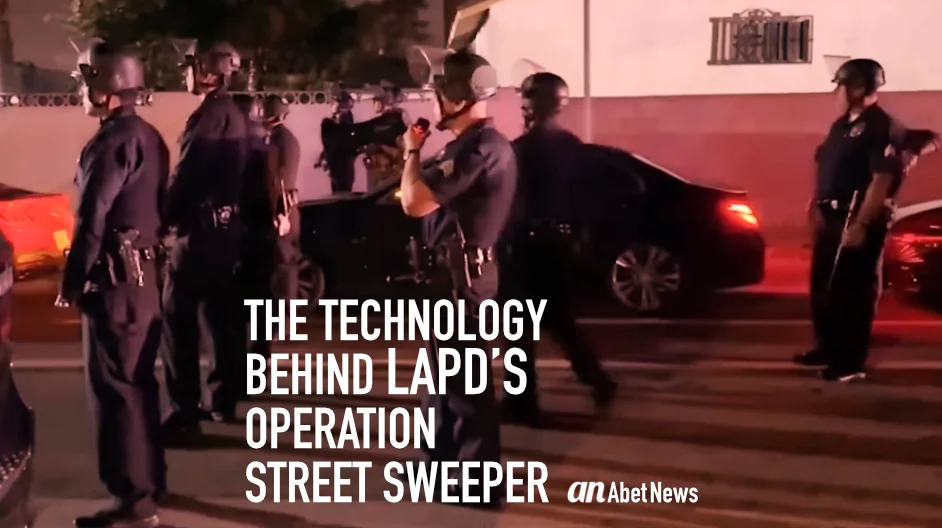
How intelligence, drones, surveillance and coordinated technology transformed the response to a massive Los Angeles street takeover
ABET NEWS | TECHNOLOGY / SOCIETY & TECHNOLOGY | SEPTEMBER 7, 2026
For years, illegal street takeovers have presented a frustrating problem for law enforcement.
Hundreds of people can suddenly converge on an intersection. Cars perform dangerous stunts while spectators surround them. By the time police arrive, participants can scatter in every direction, leaving officers with little more than burned rubber, damaged property and videos circulating across social media.
But something different happened in Los Angeles during the first night of Labor Day weekend.
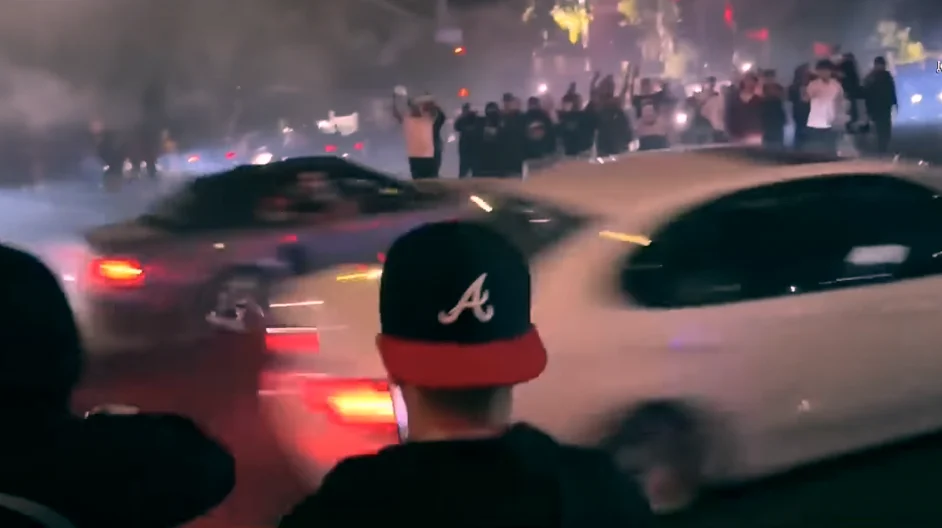
On September 5, 2026, the Los Angeles Police Department deployed more than 150 officers in what it called Operation Street Sweeper, targeting a massive street takeover in the Harbor Gateway area.
More than 700 people were reportedly gathered around South Figueroa Street and West Alondra Boulevard.
By the end of the operation, LAPD reported 69 arrests, 570 citations, approximately 200 vehicles impounded and seven firearms recovered. Personnel from the Los Angeles County Sheriff’s Department and California Highway Patrol also participated.
But the most important part of the story may not be the numbers.
It may be the technology and intelligence that helped police get there before the crowd could simply disappear.
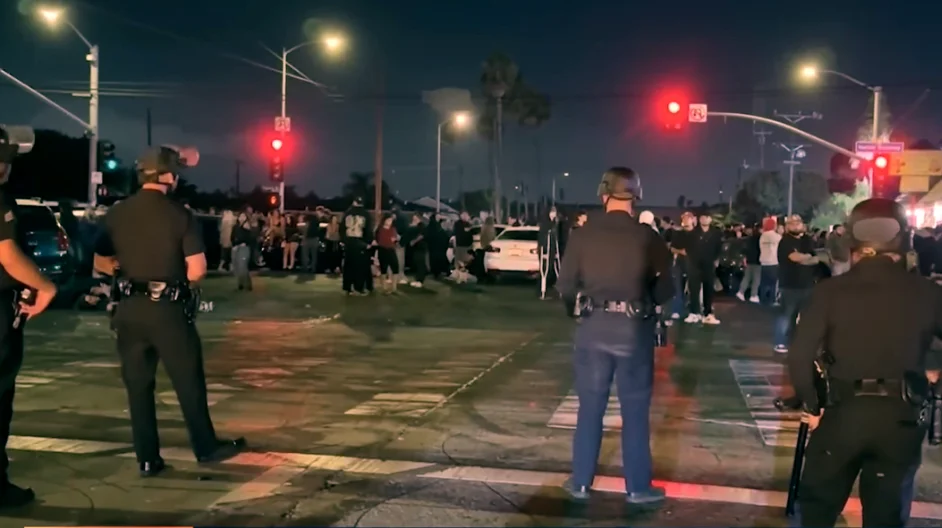
This wasn’t simply a police response
According to LAPD Chief Jim McDonnell, Operation Street Sweeper was planned in advance using intelligence gathering and drone technology.
Authorities said the technology and intelligence helped them predict the locations of four separate street takeovers before the operation ultimately converged on the Harbor Gateway intersection.
That word—predict—deserves some attention.
There is no public evidence that LAPD deployed some futuristic artificial-intelligence system that independently predicted the crime.
What officials have described is something more grounded, and arguably more important: technology-assisted intelligence-led policing.
The distinction matters.
Police appear to have combined information about recurring takeover activity with aerial surveillance and real-time observation, allowing commanders to determine where an event was developing and when the crowd had reached a sufficient size to justify the coordinated intervention.
This is technology being used not to replace police officers, but to make their deployment more strategic.
The drone becomes an eye in the sky
One of the clearest technological components publicly identified by LAPD was drone surveillance.
During the operation, officers at a command post monitored the developing crowd using drones. FOX 11 reported that officers were specifically watching vehicles with hazard lights because they were considered an indicator that the vehicles were involved in the takeover.
That creates an important tactical advantage.
A police officer standing on a street corner has a limited field of view.
Aerial surveillance can provide commanders with a much broader picture:
Where are the vehicles?
How quickly is the crowd growing?
Which streets are filling up?
Are participants arriving or leaving?
Where are officers positioned?
Are escape routes developing?
The drone doesn’t necessarily make the decision.
It gives the people making the decision a much better view of the situation.
And that distinction is important when discussing the future of policing technology.
The command center may be just as important as the drone
Perhaps the most revealing element of the operation was not the aircraft itself, but what happened with the information it produced.
Officers monitored the situation from a command post while the crowd grew.
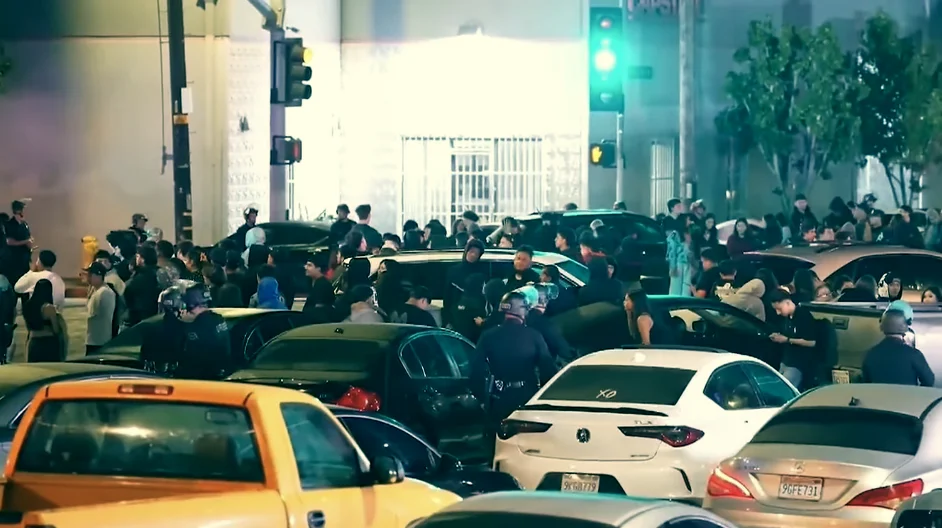
Instead of immediately rushing into the intersection, LAPD personnel reportedly waited until the takeover had developed and then moved in simultaneously from multiple directions.
FOX 11 reported that officers approached without lights or sirens and that arrest teams remained out of sight until the operation was ready to begin. Once more than 700 people had gathered, officers moved in from multiple directions, effectively boxing the area in.
This is where technology, intelligence and traditional policing intersect.
The drone provided visibility.
The command post provided coordination.
The intelligence provided context.
Communications connected the different teams.
And officers ultimately executed the operation.
The technology didn’t conduct the raid.
It helped determine when and where the raid would happen.
From reactive policing to predictive policing
This is the larger technological story.
Traditional policing is largely reactive:
A crime happens.
Someone calls.
Officers respond.
Operation Street Sweeper suggests something different.
The objective was not simply to respond to a takeover once it was underway. Authorities said they were gathering intelligence and tracking these events, using information to anticipate where they would occur.
LAPD has also said it is continuing to monitor intelligence related to organizers, including people using social media to organize takeovers. Chief McDonnell said organizers who use social media to bring people together for criminal activity could potentially face felony conspiracy charges.
This is the beginning of a much larger transformation taking place across modern law enforcement.
Police departments increasingly have access to technologies capable of observing, recording, correlating and analyzing enormous amounts of information.
Drones.
License-plate information.
Security-camera footage.
Radio communications.
Real-time video.
Social-media intelligence.
Location information.
Digital evidence.
And increasingly, artificial intelligence and machine-learning systems.
Operation Street Sweeper demonstrates what happens when several of those capabilities are brought together.

Some things cannot be automated. A kind word. A warm embrace. A healing touch.
Effusion – Healing Touch Remix, featuring Tamar (Clean)
Operation Street Sweeper was, on the surface, a massive police crackdown.
Underneath it was something else: a glimpse of what happens when policing becomes increasingly data-driven, connected and predictive.
The question now is not whether technology will become part of modern law enforcement.
It already has.
The question is how far we are willing to let it go—and how much transparency and accountability we demand as it gets there.
David Frein
© 2026 Abet News. All rights reserved.
Related Posts









2 comments on The Technology Behind LAPD’s Operation Street Sweeper
Public surveillance cameras will likely increase due to such behaviors.
Can’t stop the inevitable.