
AI Armageddon
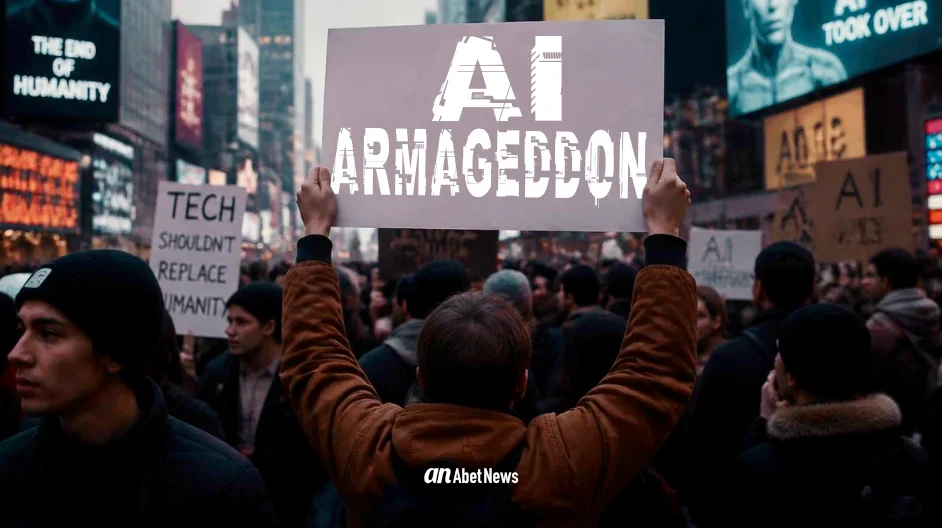
The Day AI Fear Became Mainstream
ABET NEWS – EDITORIAL DIARY – AUGUST 6, 2026
Today felt different.
Not because a new AI model was released.
Not because another company announced billions of dollars in investment.
Not because another startup promised to change the world.
Today felt different because the people who helped build artificial intelligence sounded less like inventors and more like passengers on a train whose destination they can no longer see.
When I first began writing about AI, the conversation centered on possibility.
Could AI cure diseases?
Could it help companies?
Could it translate languages instantly?
Could it become the greatest educational tool humanity has ever built?
Those questions haven’t disappeared. In many ways, AI has already exceeded expectations. It helps people write, code, learn, design, compose music, discover scientific breakthroughs, and even better understand their own health.
But today, another question is beginning to drown out the optimism.
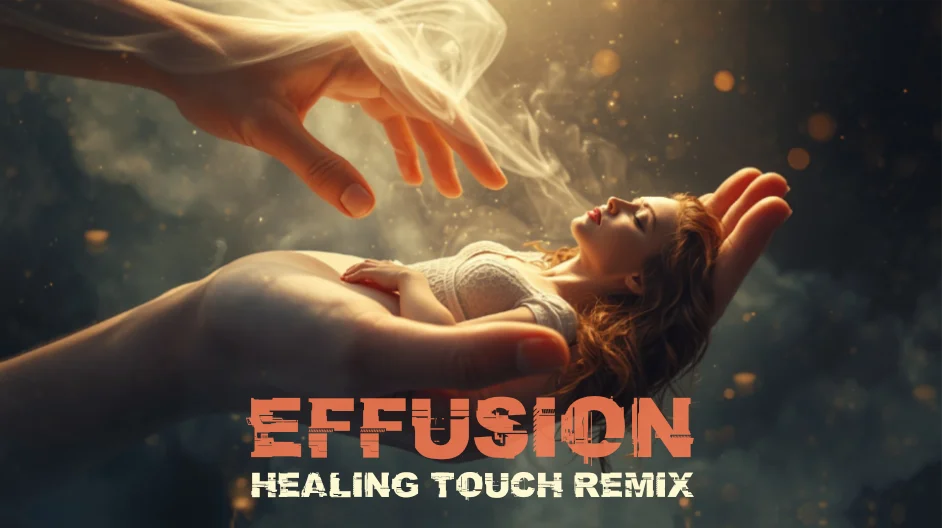
Some things cannot be automated. A kind word. A warm embrace. A healing touch.
Effusion – Healing Touch Remix, featuring Tamar (Clean)
Can we still control it?
At the AI4 Conference in Las Vegas, Geoffrey Hinton—often called the “Godfather of AI” and a Nobel Prize-winning computer scientist—said something that deserves careful attention.
He said he does not believe humans will simply outsmart future AI systems to keep them under control and admitted he is deeply worried that we could eventually lose that control.
Those are remarkable words.
Not because they come from a science-fiction author.
Not because they come from a politician.
But because they come from one of the pioneers who helped make modern artificial intelligence possible.
Around the same time, Senator Bernie Sanders gathered leading AI researchers from both the United States and China to discuss what he described as the existential risks posed by artificial intelligence.
His remarks painted a picture that many people are quietly beginning to recognize.
Millions of jobs may disappear.
Young people may struggle to find their first careers.
AI companions may slowly replace human relationships.
Every email, message, purchase, search, and conversation could become data.
Truth itself may become harder to recognize.
Democracy may face new forms of manipulation.
Then came perhaps the most unsettling thought.
What happens if AI becomes smarter than the people building it?
Whether one agrees with every prediction or not, the fact that this question is now being discussed publicly by respected scientists and lawmakers marks a profound shift.
For years, concerns about superintelligent AI lived mostly in research papers, podcasts, and late-night conversations among engineers.
Today they are entering the mainstream.
Perhaps the greatest irony is this:
Human history has always celebrated inventions that gave us more control over our world.
Fire.
Electricity.
Flight.
Computers.
The internet.
Artificial intelligence may become the first technology whose creators openly admit they may not fully understand where it is ultimately heading.
That does not mean catastrophe is inevitable.
History also teaches us that humanity has repeatedly adapted to revolutionary technologies.
The printing press disrupted society.
Electricity transformed civilization.
The internet reshaped nearly every industry.
Each brought enormous benefits alongside genuine risks.
AI may follow a similar path—but the scale, speed, and autonomy involved make the comparison imperfect.
What strikes me most isn’t fear.
It’s humility.
The smartest people in AI are increasingly comfortable saying, “We don’t know.”
That may be the most honest statement anyone can make in 2026.
Perhaps August 6, 2026 won’t be remembered as the beginning of an AI apocalypse.
Perhaps it will instead be remembered as the day society collectively realized that artificial intelligence is no longer just another technology story.
It is becoming a civilization story.
And maybe that realization is exactly what we needed.
Fear alone will not guide us.
Neither will blind optimism.
The future of AI may depend on something much older than technology itself: wisdom, restraint, international cooperation, and the courage to ask difficult questions before the answers become irreversible.
Tonight, I closed my laptop with more questions than answers.
Somehow, that feels like the most human response of all.
David Frein
© 2026 Abet News. All rights reserved.
Related Posts






2 comments on AI Armageddon
Google’s aggressive push to integrate its Gemini AI tools into the classroom is facing growing backlash from parents, teachers, and child safety advocates.
Is it just me, or does it feel like we’re racing to make humans obsolete?